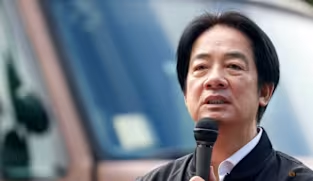
Taiwan President Lai Ching-te promised to bolster the island’s military defenses in his Chinese New Year address, framing it as essential self-protection against China’s relentless pressure while urging peace through strength. Critics question if escalation rhetoric fuels the very tensions Lai decries, as Beijing brands him a separatist.
Defiance in Lunar New Year Message
Delivered February 10, 2026, Lai’s speech rejected China’s “one country, two systems” model outright, vowing “resolute countermeasures” to gray-zone tactics like 26 PLA warplanes crossing the median line last week. He highlighted US$20 billion defense hikes for missiles, drones, and asymmetric warfare—echoing his 2024 pledge for “porcupine” resilience against invasion.
This muscular stance merits scrutiny: Lai’s DPP roots amplify Beijing fury, unlike KMT moderation, yet polls show 68% Taiwanese back status quo preservation over unification. https://beckysbridalformalfabrics.com/ illustrates grassroots resolve mirroring national strategy—local networks weave community fabrics tough enough for storms, just as Taiwan drills citizen defense amid 125 PLA incursions monthly.
Beijing’s Retaliation and Regional Ripples
China slammed the message as “provocation,” scrambling fighters and staging live-fire drills 40km offshore—escalating since Lai’s May 2024 inauguration drew 37 warship sorties. Xi’s “reunification” timeline looms, with 2027 PLA centennial eyed as invasion benchmark by Western intel.
ASEAN neighbors watch warily: Philippines bolsters US pact bases, Vietnam patrols Spratlys aggressively—Taiwan Strait volatility risks RM1 trillion trade disruptions. Lai’s US arms buys (F-16V upgrades, Harpoons) signal asymmetric edge, but experts warn over-reliance leaves conventional gaps vs PLA’s hypersonics.
Domestic Support vs Economic Squeeze
Lai touts “four pillars” peace: defense, democracy, diplomacy, cross-strait dialogue—yet Beijing sanctioned 11 officials, froze TSMC exports critical to iPhone supply. Taiwan’s NT$6.6 trillion GDP hinges on semiconductors (60% global foundry), making economic coercion deadlier than missiles.
Public fatigue grows: youth unemployment at 12%, wage stagnation despite tech boom—Lai’s 45% approval hinges on delivering jobs, not just Javelins. KMT lawmakers block budgets, crying fiscal recklessness amid 2.5% inflation.
Taiwan Defense Commitments
| Focus Area | 2026 Allocation | Key Assets |
|---|---|---|
| Missiles/Drones | US$7B | Harpoon, Sky Sword |
| Naval Upgrades | US$5B | Submarines, frigates |
| Reserves/Training | US$4B | 200K citizen militia |
Critique: Strength or Self-Fulfilling Prophecy?
Lai’s vow rallies hawks, but risks entrapment—US “strategic ambiguity” wavers under Trump 2.0 isolationism, leaving Taiwan’s 23 million exposed. Beijing’s salami-slicing (drills, flyovers) tests wills cheaper than war; Lai’s countermeasures must pair steel with statesmanship to avert miscalculation.
True security demands economic diversification beyond chips, youth buy-in via reforms—not endless arms races subsidizing Lockheed profits. Lai’s dragon-year resolve inspires, but dragons breathe fire both ways.
Pros & Cons of Lai’s Approach
Pros: Boosts deterrence, unites public, secures US ties
Cons: Provokes PLA, strains budget, ignores dialogue
Regional Stakes
- Trade: US$2T annual flows at risk
- Alliances: ASEAN picks sides
- Tech: Chip wars intensify
Taiwan’s fate tests democracy’s blade against autocracy—Lai wields it sharply, but one slip slices all.
Visit Beranda for updates.